Game Details
| Size | 284 MB |
| Region | Japan |
| Genre | Fighting |
| Format | 7z / BIN |
| Year | July 19, 1996 |
| Console | PSX |
Advanced V.G. (1996)—short for Advanced Variable Geo—is a classic 2D fighting game that holds a unique place in the PlayStation 1’s history. Developed by TGL (Technical Group Laboratory), it is an upgraded port of a popular PC-98 Japanese game. It gained a strong cult following for its fluid 2D sprite work, anime aesthetic, and surprisingly technical fighting mechanics.
Because of its themes, the game was a Japan-exclusive release, meaning Western fans had to rely heavily on importing the game.
Story & Premise
The game centers around the “Variable Geo” tournament, a high-stakes martial arts competition sponsored by massive global corporations. The catch? The roster consists entirely of waitresses representing various family restaurant chains (like “Restaurant Jinnai” or “Presto”).
The Prize: The winner of the tournament is awarded an astronomical cash prize and the coveted title of the “V.G. Queen.” However, behind the glossy corporate sponsorship lies a deeper corporate conspiracy involving human experimentation and cloning that the tournament’s top fighter, Yuka Takeuchi, is forced to dismantle.
Key Gameplay Features
-
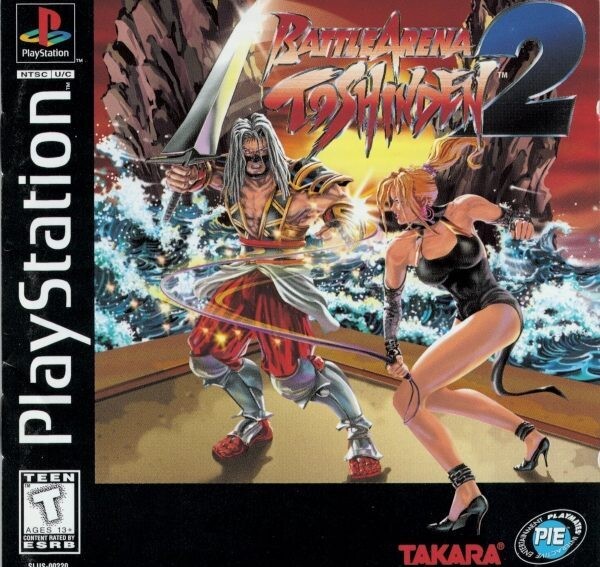
Anime-Style 2D Sprites: Unlike the blocky 3D games of 1996 (like early Tekken or Battle Arena Toshinden), Advanced V.G. stuck to beautiful, hand-drawn 2D character sprites and fluid animations.
-
Visual Novel Story Mode: The single-player mode plays out like a visual novel, featuring fully voiced dialogue (in Japanese) and beautiful anime cutscenes between matches to flesh out the narrative.
-
Technical Fighting Mechanics: While the “waitress” premise sounds gimmicky, the gameplay is incredibly solid. It borrows heavily from the Street Fighter Alpha and Darkstalkers series, featuring multi-hit combos, air-blocking, special moves, and flashy “Super” meters.
-
Distinct Character Playstyles: The 8 core playable characters represent distinct archetypes, from Yuka’s balanced “Shoto” playstyle to Kyoko’s swift rushdown moves and Satomi’s heavy grapples.
Short Review: A Hidden 2D Gem
The Good
-
Solid Mechanics: It handles exceptionally well. If you love 90s Capcom fighters, the input responsiveness and combo tracking feel immediately familiar and satisfying.
-
Production Value: The CD-ROM format of the PS1 allowed TGL to pack the game with an excellent redbook audio soundtrack and tons of crisp voice acting.
-
Historical Charm: It represents a specific era of mid-90s Japanese otaku culture that transition seamlessly from PC hobby systems to mainstream consoles.
The Bad
-
Language Barrier: Because the extensive Story Mode is entirely in Japanese, Western players playing on original hardware will miss out on the context of the plot.
-
Limited Roster: With only 8 core characters in the base game, it can feel a bit small compared to behemoths like Street Fighter Alpha 2 or King of Fighters ’96 which landed around the same time.
Screenshots