Game Details
| Size | 145 MB |
| Region | USA |
| Genre | Hack and Slash |
| Format | 7z / ISO |
| Year | March 7, 2006 |
| Console | PSP |
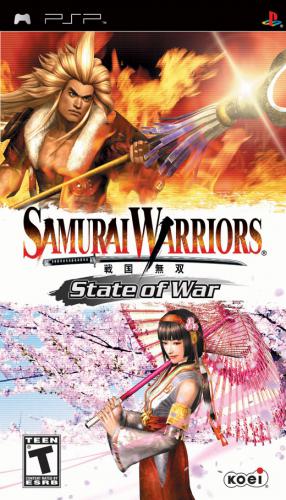
Samurai Warriors: State of War (released in Japan as Geki Sengoku Musou) is a highly specialized tactical adaptation of the mainline 128-bit hack-and-slash series for the PlayStation Portable. Developed by Omega Force and published by Koei, the game completely reimagines the signature large-scale battlefield exploration into a quick-access, board-game-style portable formula to better suit gaming on the go.
Story & Premise: The Reimagined Sengoku Era
The game is set during the bloody and volatile Sengoku Period (Warring States Era) of feudal Japan. The narrative adapts and twists historical events, allowing players to navigate the personal campaigns and political rivalries of iconic military warlords striving to unite a fractured nation under one banner.
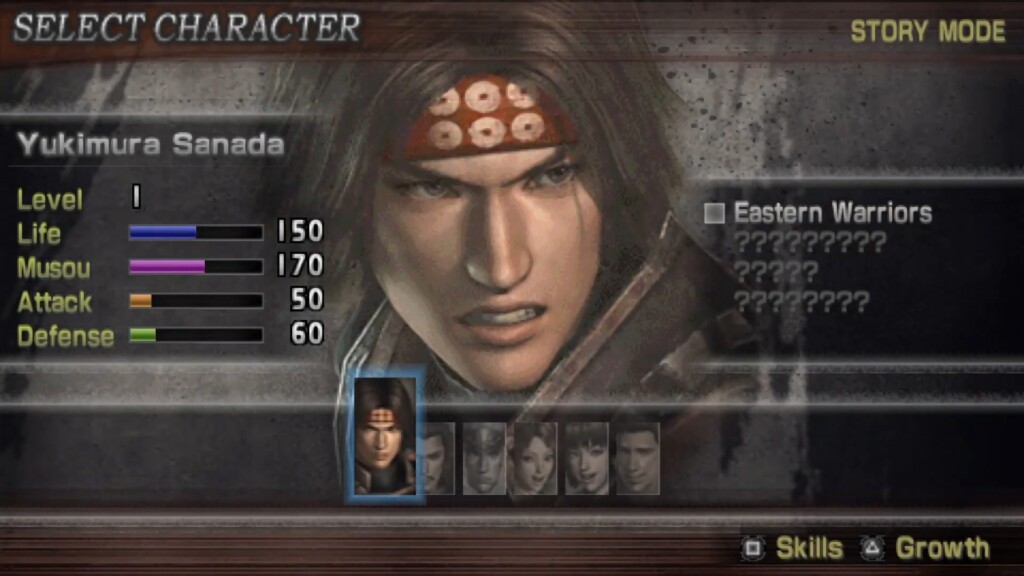
Rather than standard linear stories, State of War includes over 19 playable historical figures—such as the noble Sanada Yukimura, the fierce Oda Nobunaga, the tragic Oichi, and the wandering ninja Hattori Hanzo—each featuring customized, slightly altered “what-if” story paths that reveal what might have occurred if specific historical battles had turned out differently.
Key Gameplay Features
- The Turn-Based Strategy Grid: The single biggest departure from the home console versions. Stages no longer consist of one giant, continuous 3D open landscape. Instead, the battlefield is laid out like an isometric board game grid. Players spend points to move their primary hero icon space-by-space across the tactical tiles to capture enemy strongholds.
- Bite-Sized Action Skirmishes: When your character icon lands on an enemy-occupied tile, the game shifts seamlessly into classic third-person Musou combat. To keep handheld play sessions short, these skirmishes are highly concentrated micro-missions with strict 60-to-75-second time limits. Goals range from executing a set number of KOs to assassinating a specific gate captain or holding down an outpost.
- The Tactical Charm & Spell Matrix: Before initiating a tile skirmish, players can cast strategic spells directly onto the map screen. These unlock unique perks, allowing you to manually heal your vanguard forces, dynamically slow down incoming enemy reinforcements, or deal preemptive damage to an enemy tile before stepping onto it.
- Massive Sub-Officer Army: State of War includes a massive roster of over 200 unlockable sub-generals (including fun crossover cameos from the Dynasty Warriors series). Equipping these sub-officers to your vanguard grants permanent stat boosts, unlocks defensive shields, and adds unique helper characters who fight directly alongside you during combat encounters.
- Widescreen Combat Performance: Omega Force heavily optimized their core engine code for the PSP’s specialized architecture. The title utilizes the handheld’s full widescreen aspect ratio and handles an impressive density of enemy character models simultaneously on screen with remarkably minimal slowdown.
Short Review: Snappy Portability with a Fragmented Flow
The Good
- Superb Handheld Structuring: The decision to chop long 40-minute console battles into short, distinct 1-minute tactical grid loops makes it an incredibly satisfying pick-up-and-play experience for commuting or traveling.
- Flawless Load-Time Optimization: For an early-era UMD game, the optimization is phenomenal. Once the initial map layers load, players can hop smoothly back and forth between the strategy board and active combat fields with virtually zero transition lag.
The Bad
- Highly Unreliable Allied AI: While you have full control over your personal character, your computer-controlled allied armies act completely independently on the grid. The AI is notoriously dim, frequently abandoning critical home bases to chase low-value tiles, forcing you to constantly backtrack across the board to fix their tactical errors.
- Visual and Objectives Repetition: Because the progression framework relies on clearing dozens of small grid tiles back-to-back, you will find yourself running the exact same style of “KO 50 peasants in 60 seconds” skirmish repeatedly within a single campaign, which can make extended play sessions feel slightly monotonous.
Screenshots