Game Details
| Size | 456 MB |
| Region | USA |
| Genre | RPG |
| Format | 7z / ISO |
| Year | September 26, 2006 |
| Console | PSP |
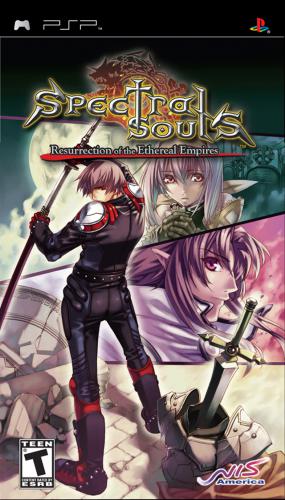
Spectral Souls: Resurrection of the Ethereal Empires (2006) is a massive, deeply complex tactical role-playing game (TRPG) developed by Idea Factory and published in North America by NIS America. Set in Neverland—the expansive fantasy universe that acts as the backdrop for many of Idea Factory’s franchises—it is widely known for two things: its brilliant, interlocking three-faction narrative system, and its historically notorious technical performance issues on the physical PSP hardware.
🧭 The Story: A Three-Sided War
The narrative takes place in the year 1053. For centuries, humans and demons (Neverland’s native inhabitants) have clashed in vicious, cyclical holy wars. Spectral Souls tells this sprawling story by forcing you to play from the perspectives of three completely separate, competing factions:
- ⚔️ The Imperial Army (Neverland Empire): The ruling demon empire, led by Jadou, fighting to maintain their historical dominance over the continent.
- 🛡️ The Rebel Army (Simba Army): The human resistance movement, rallied by the young commander Naiz, fighting to overthrow their demonic overlords.
- Distrustful of both monolithic forces, a third neutral faction emerges—the Rozess Liberation Army—trying to pave a path for peace amidst the chaos.
The Historical Timeline Menu
Instead of following a linear path, the game centers around a chronological timeline tracker. You are routinely forced to swap control between these armies, sometimes playing a battle from the human side, only to immediately play the exact next skirmish from the demonic defensive point of view. Crucially, your choices and battlefield successes with one army directly affect the narrative options, survival, and endings of the other two.
⚔️ Gameplay: Interlocking Tactical Mechanics
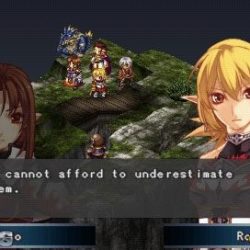
The battle loop takes place on a traditional grid-based isometric plane. However, the depth of its mechanical layers is incredibly vast:
- Action Points (AP) System: Characters don’t just “move and attack.” Every single action—stepping a tile, swinging a blade, casting a spell, or healing—consumes a specific amount of AP. If you end your turn with surplus AP, that leftover value carries over to reduce your delay time before your character’s next turn comes around.
- The Combo & Chain System: You can stack multiple elemental or physical attacks into a single action cue. If you target an enemy, you can execute a basic strike, chain it into a secondary slash, and finish with a magic spell. By positioning multiple allies close together, you can initiate a Hold Attack, linking their turns seamlessly to drop devastating group combos on a boss.
- Enormous Customization: Beyond standard leveling, the game boasts an intensely deep crafting system. You collect raw materials from battles to manually synthesize weapons, upgrade gear attributes, and register unique skill gems to unlock advanced job classes.
⚠️ The Elephant in the Room: The Infamous Loading Times
It is impossible to discuss the original PSP release of Spectral Souls without mentioning its technical performance. When playing the game off the original physical Universal Media Disc (UMD), the loading optimization was severely flawed.
The game regularly requires mid-battle load breaks. Triggering a simple physical slash or casting an elemental spell forces the console to stop, spin up the physical UMD disc laser, and load the animation asset for 3 to 7 seconds.
Because of this constant stuttering, standard tactical battles that should take 15 minutes can routinely drag out past the 45-minute mark.
- Note: In later years, players mitigated this entirely by copying the digital data to a high-speed Memory Stick, or playing the optimized digital ports subsequently released for Android and iOS devices.
⭐ Short Review: A Diamond in the Rough
The Good
- Incredible Narrative Ambition: Playing three sides of a massive war—where heroes in one chapter become the terrifying bosses you must kill in the next—makes for a thoroughly gripping, mature fantasy story.
- Rewarding Strategic Depth: The AP management and weapon synthesis systems are brilliantly designed, offering hundreds of hours of deep tactical theorycrafting for hardcore RPG veterans.
The Bad
- Technical Suffocation: The atrocious, constant load times of the physical UMD version completely break the combat momentum and test the patience of even the most dedicated players.
- Cryptic True Ending Requirements: Unlocking the definitive “True Route” ending requires completing a checklist of highly specific, completely hidden events across the three factions without making a single unguided mistake.
Screenshots